

Europe is a region that had everything it needed to be home to the best countries in the world. For years it had cheap oil from Russia, defense from the United States and raw materials from China. And yet, instead of betting on growth and competitiveness to build the best group of countries on the planet, it chose pointless regulation and bureaucracy, and welfare policies. I support welfare, but not the way it’s been done: most of the time these policies were created to win votes and nothing more, knowing full well they couldn’t afford them.
A young person doesn’t need help to buy a house. They need a decent salary and a strong economy to grow in, so they can earn enough to afford one, whether by starting a business or working for someone else.
And that house shouldn’t be an object of speculation. It should have a normal price, affordable for anyone, because having your first home, having a place to live, should be a basic, universal right. Yet young people in Europe can’t start a family or find a place to live. A monkey in the jungle has both, and young Europeans don’t. But then they fill their mouths calling themselves first-world, civilized countries, leaders of freedom and rights. Apparently rights are only for the old. For the young, a salary that isn’t even enough to live on.
Now things are changing fast. Let’s look at what lies ahead for Europeans and their benchmark index.
The Euro Stoxx 50 in trouble
There’s something I’ve learned in my eleven years in the market: the narrative always comes after the market. That’s why I always use the market itself to see what’s going on. The market prices in what’s happening in the world perfectly, long before it shows up anywhere else.
As I write this, signals across every market, not just Europe, point to trouble and a correction. I decided to write this article because Europe is, by far, the part of the world where the most problems have shown up at once, and its index is already talking.
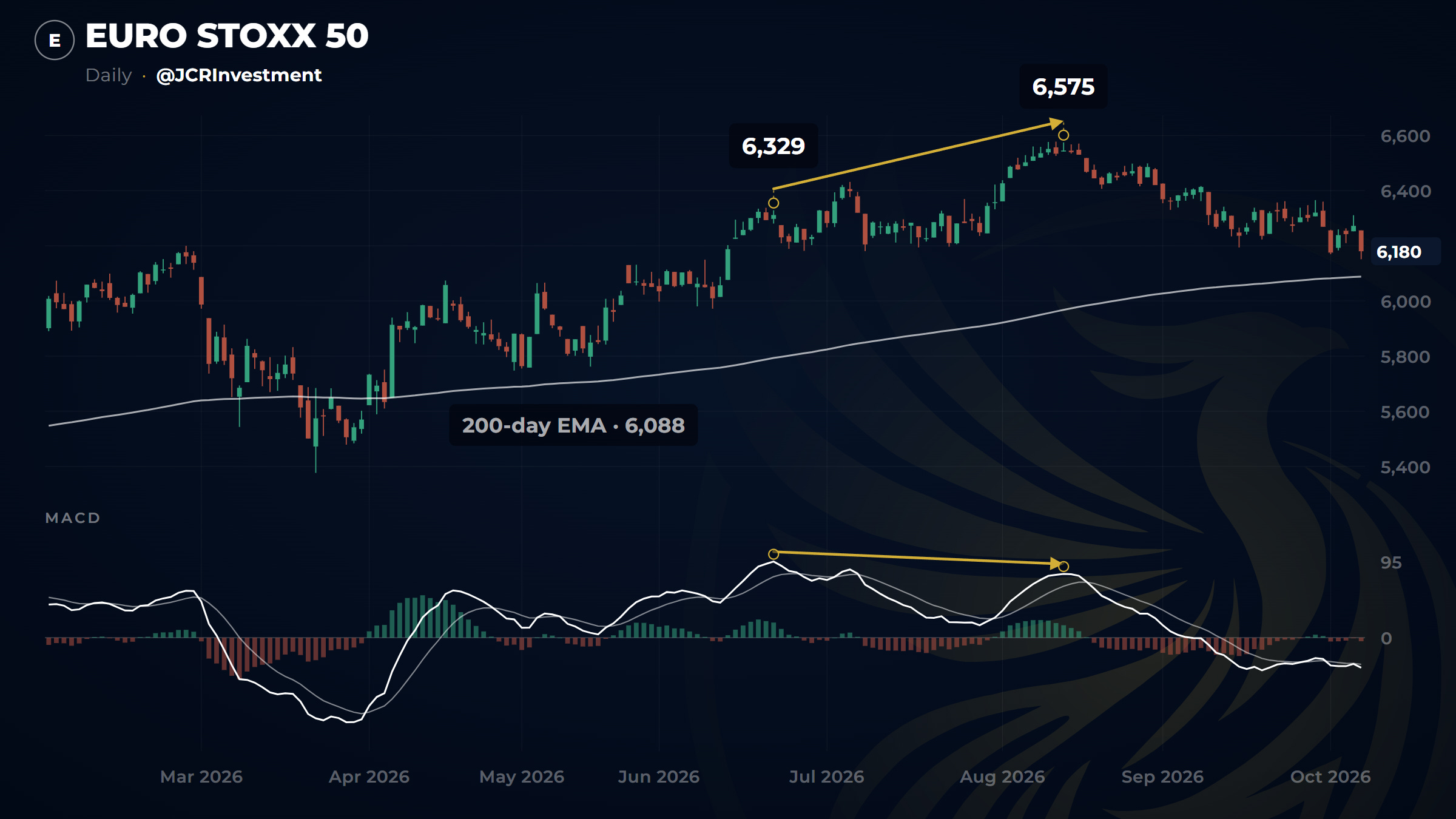
First, a bearish divergence appeared on its daily chart. That alone triggered the first drop, down to the area of its daily average.
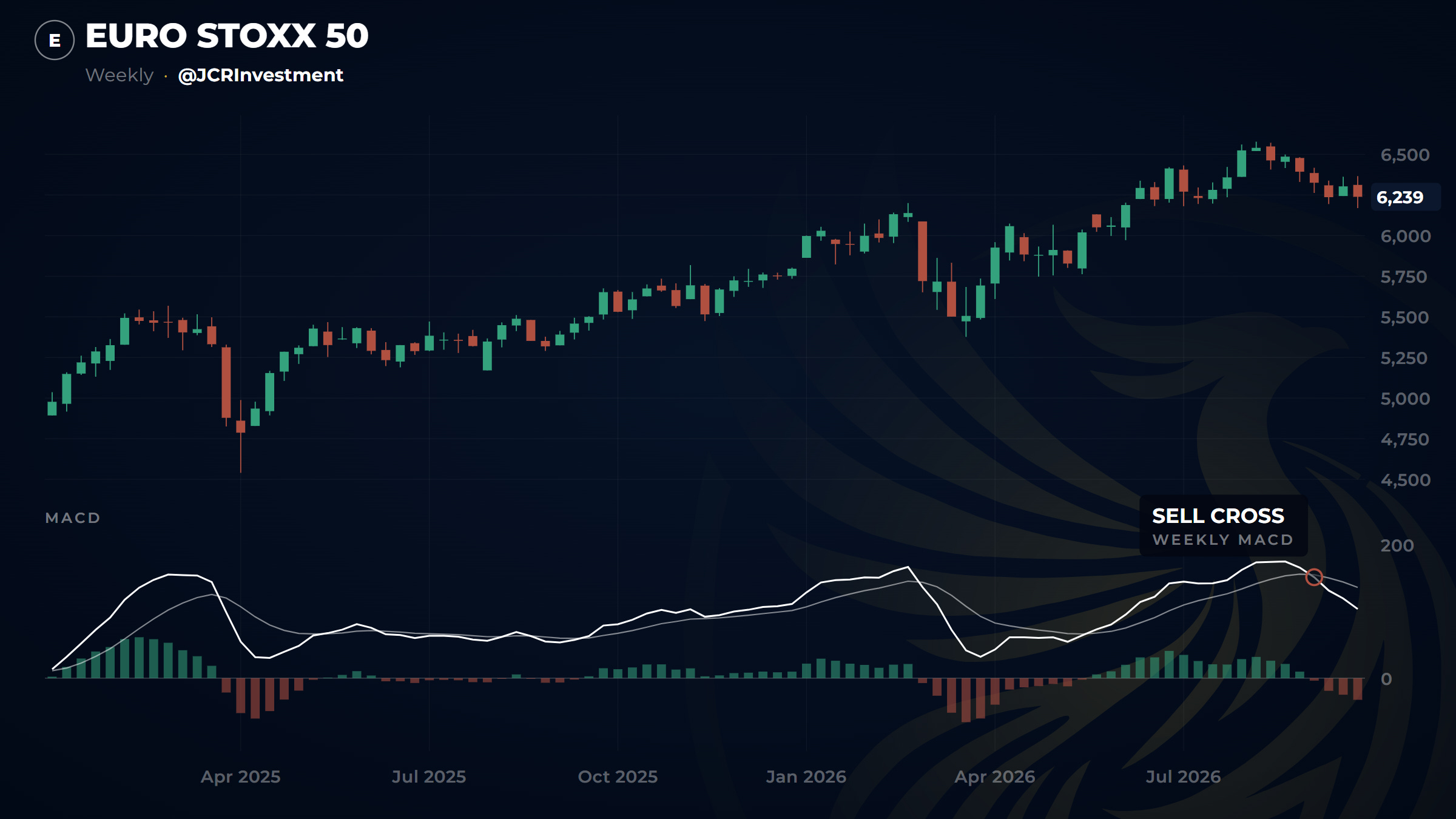
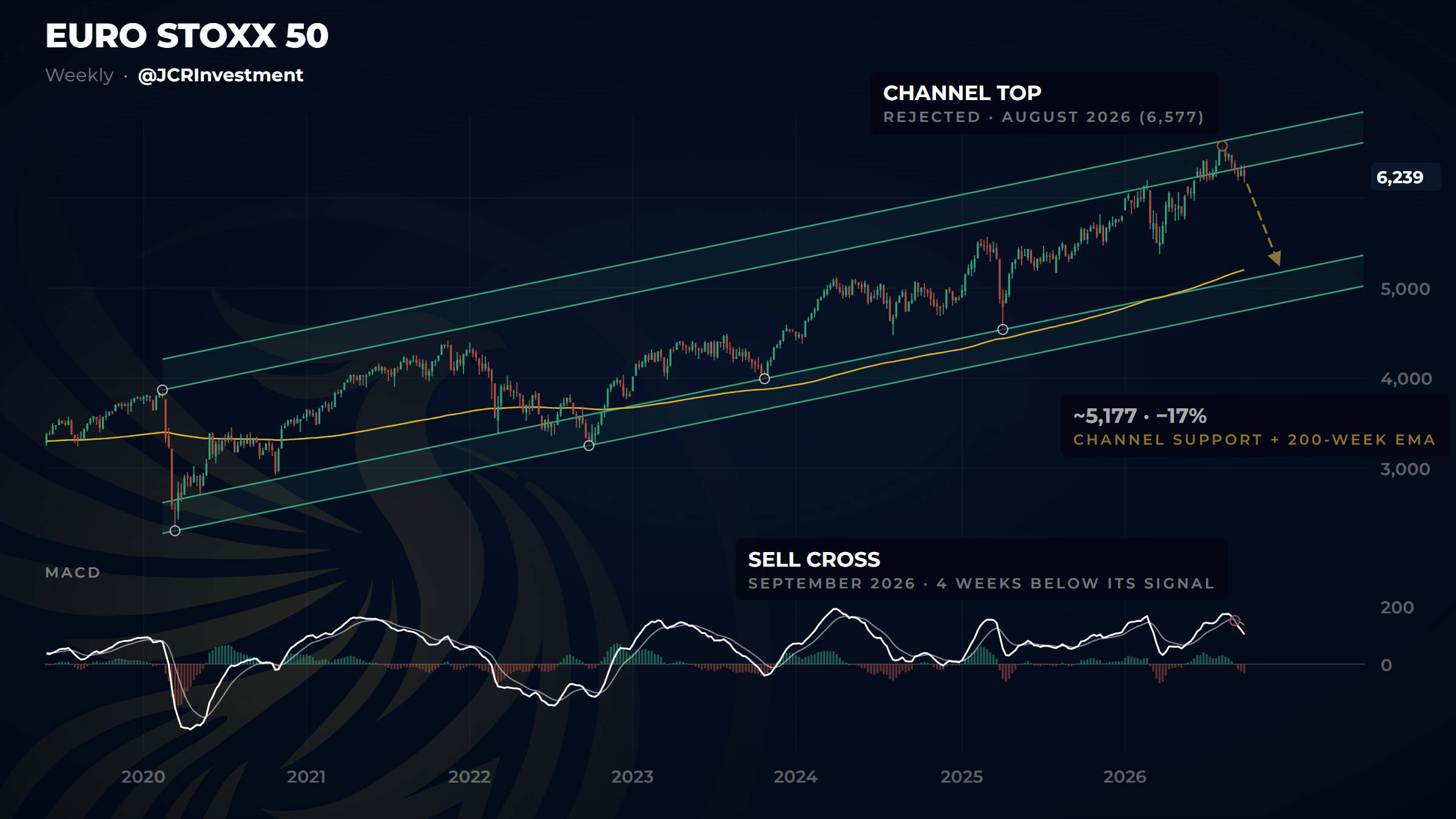
Then, on its weekly chart, the MACD crossed down, signaling that a correction is coming in the next few weeks. The most normal outcome would be for that correction to reach its 200-week average, which lines up with a long-term channel and support.
On its monthly chart, it has also flashed a divergence on the RSI, and the MACD has started to turn. If it crosses down in the coming weeks, it will be a strong sign of trouble for this index.
And as if that weren’t enough, it left a shooting star candle on the monthly chart, already confirmed by the next candle.
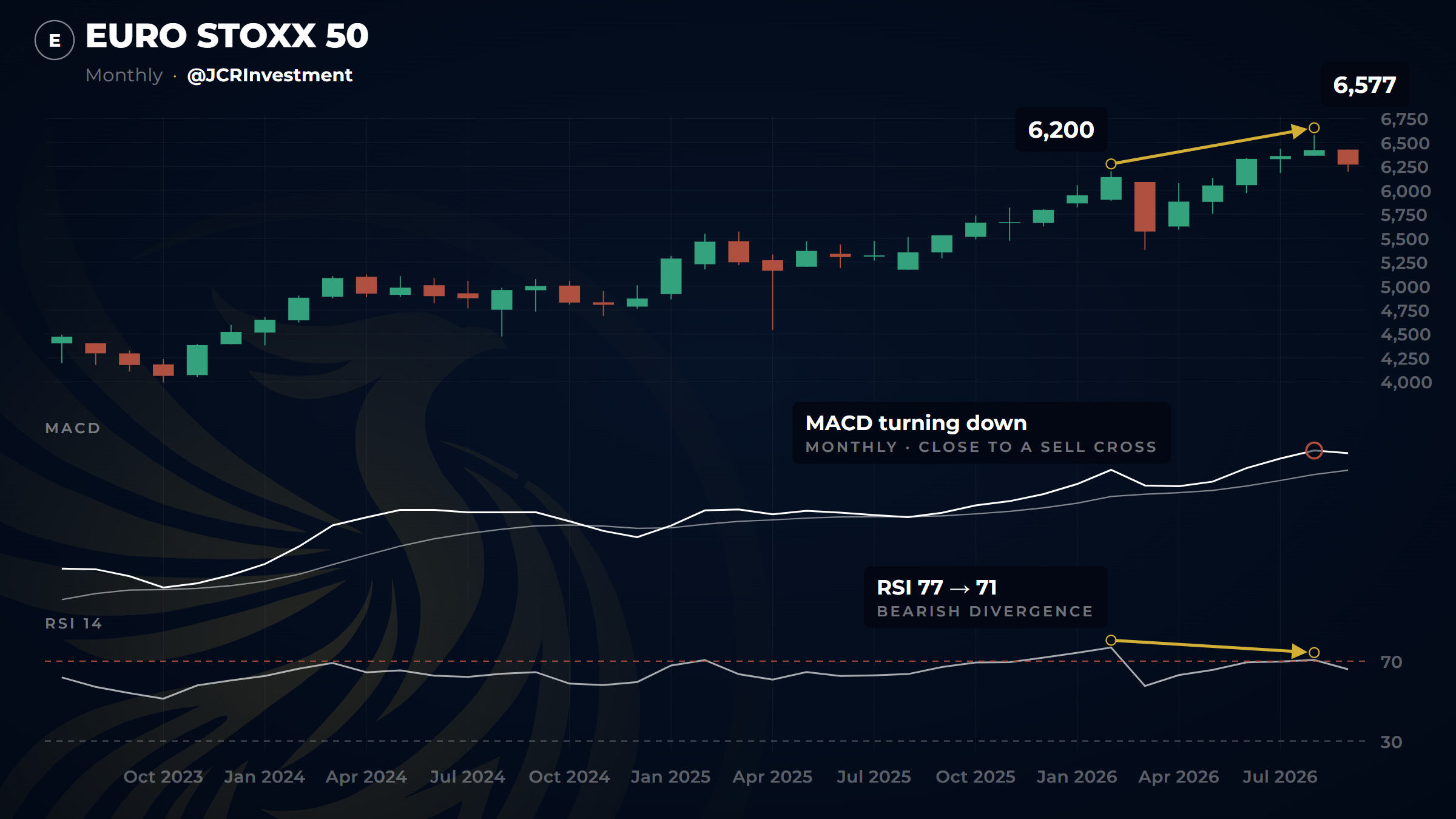
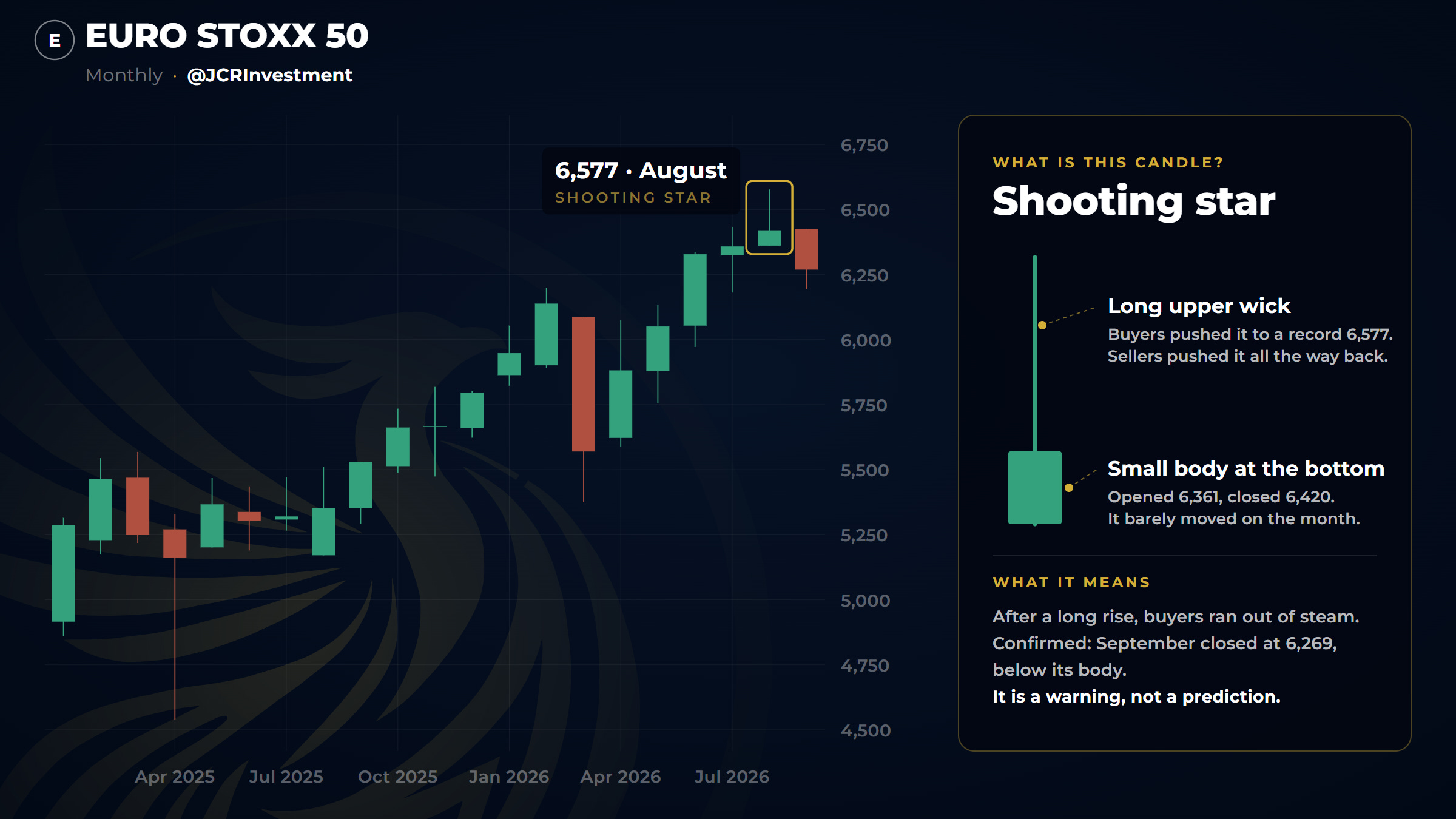
I want to be clear: few times in my eleven years in the markets have I seen so many warning signs together in a single index.
The French problem
All of this comes at a very difficult time for France, one of Europe’s leading countries. Rising bond yields are raising doubts about France’s ability to pay its debt. Its index, as always, warned before the narrative reached the market.
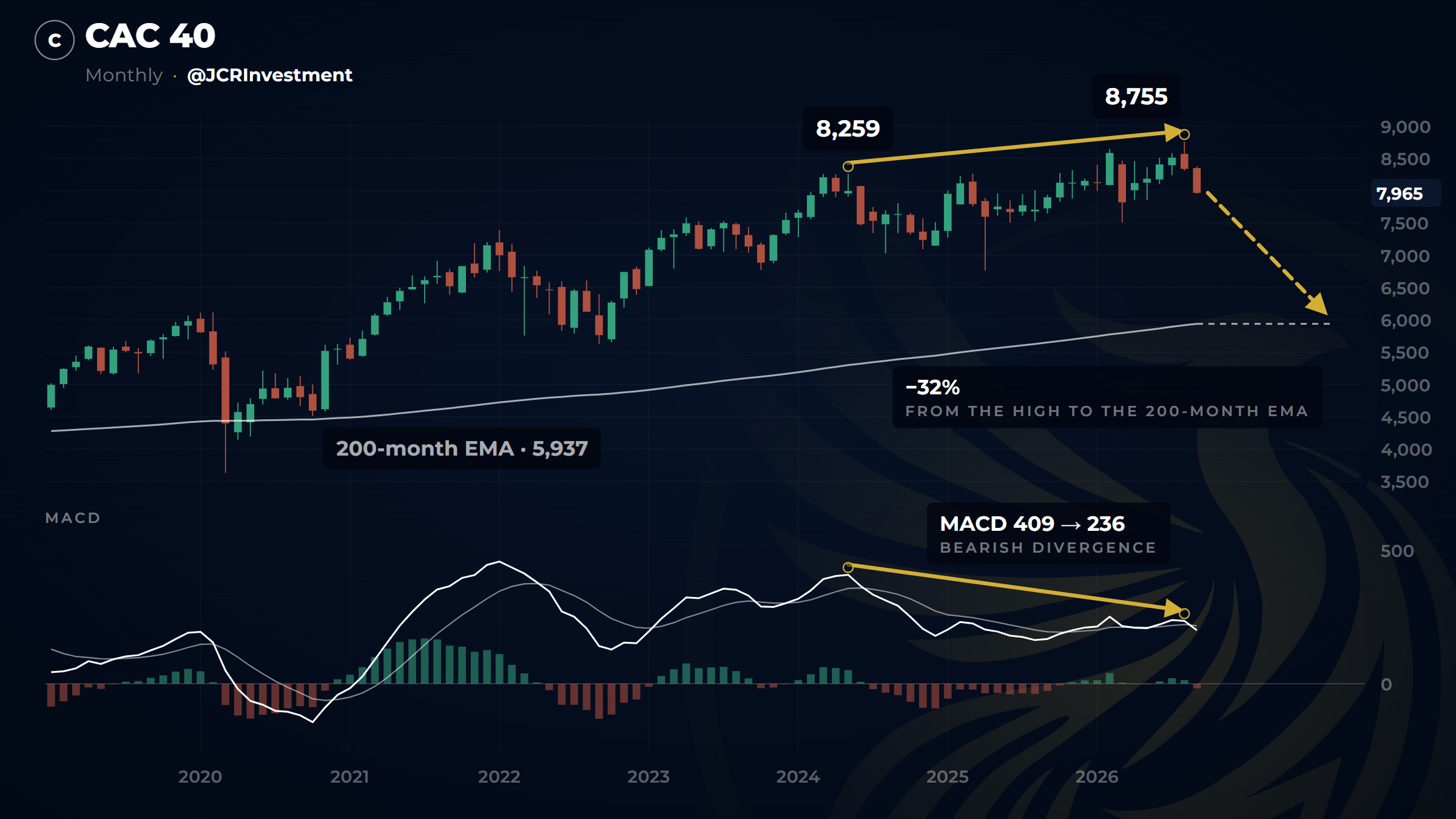
And I want what I’m about to say to be very clear. The narrative always comes after the market. What a coincidence that, just as the index sits at the upper resistance of two long-term rising channels, the market narrative suddenly picks up that France has fiscal problems. Not a year ago, not six months ago. Now, right when it reaches the top of its channel.
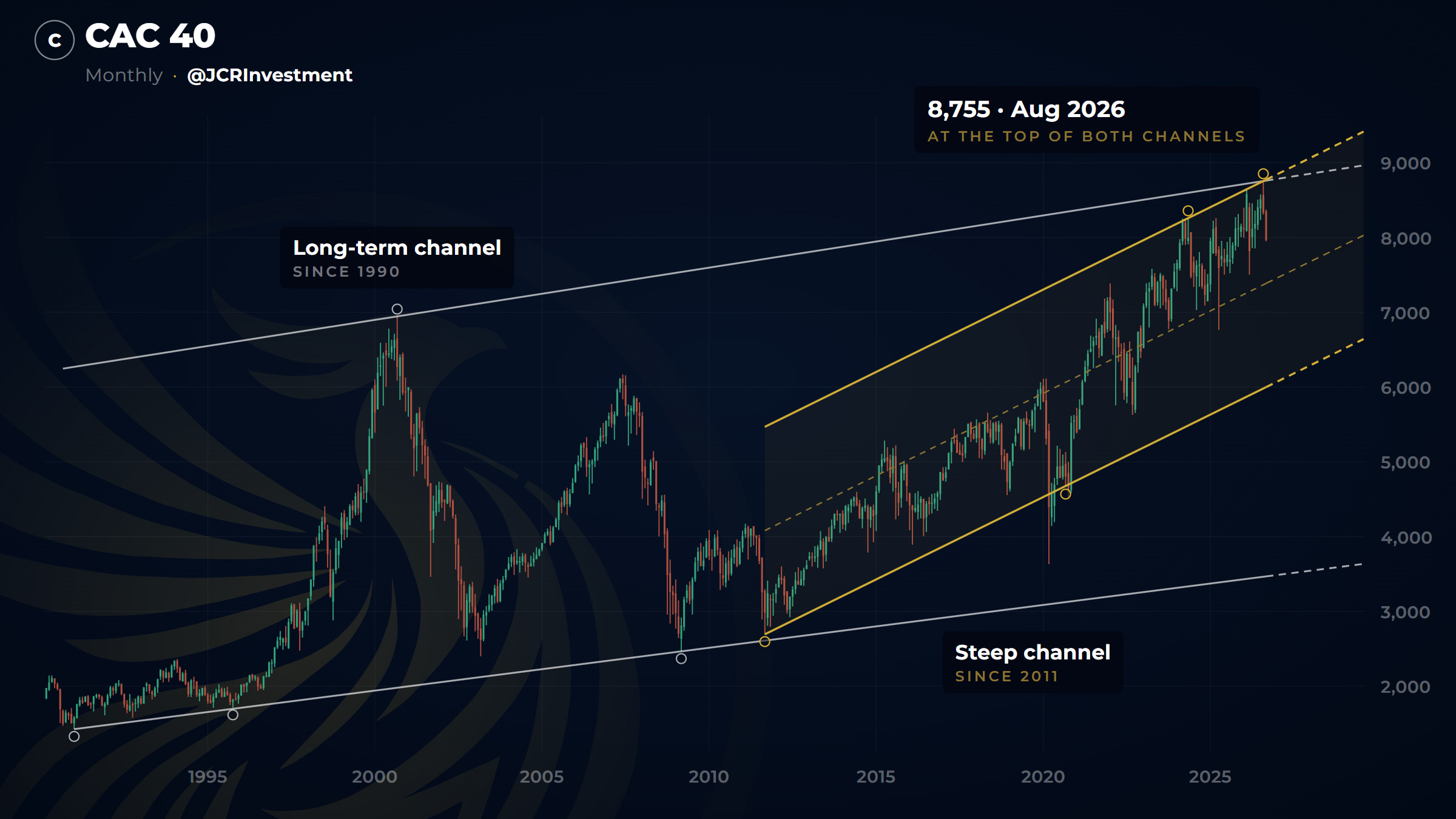
Throughout my life I’ve learned not to believe in coincidences. This narrative arrives at exactly the right moment. Let’s look at the drop I expect, and at the real problems these indices are pricing in and that Europe is facing.
Winter is coming
For many years, Europe enjoyed cheap Russian oil. That’s over now. Nord Stream 2 was blown up, and the war in Ukraine ended any attempt to improve things.
On top of that, Saudi Arabia and the Middle East are, coincidentally, suffering Houthi attacks on their refineries. That leaves the United States as the only safe oil supplier, and it recently warned it could ban diesel exports, leaving Europe without fuel at its worst possible moment.
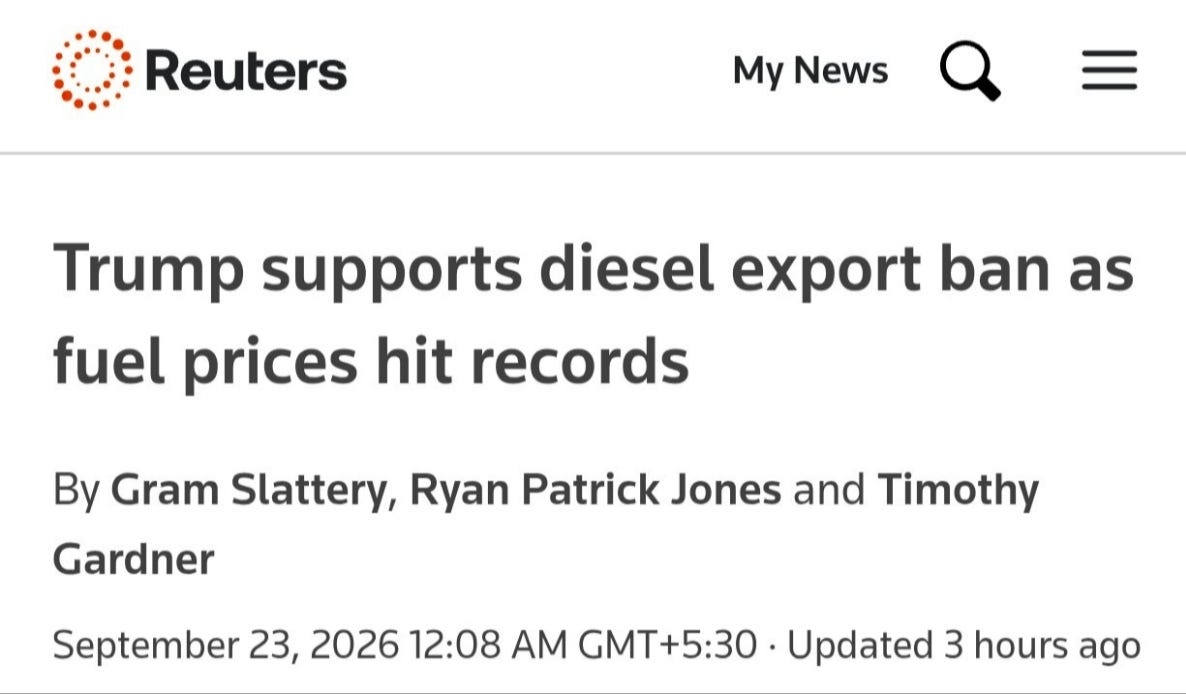
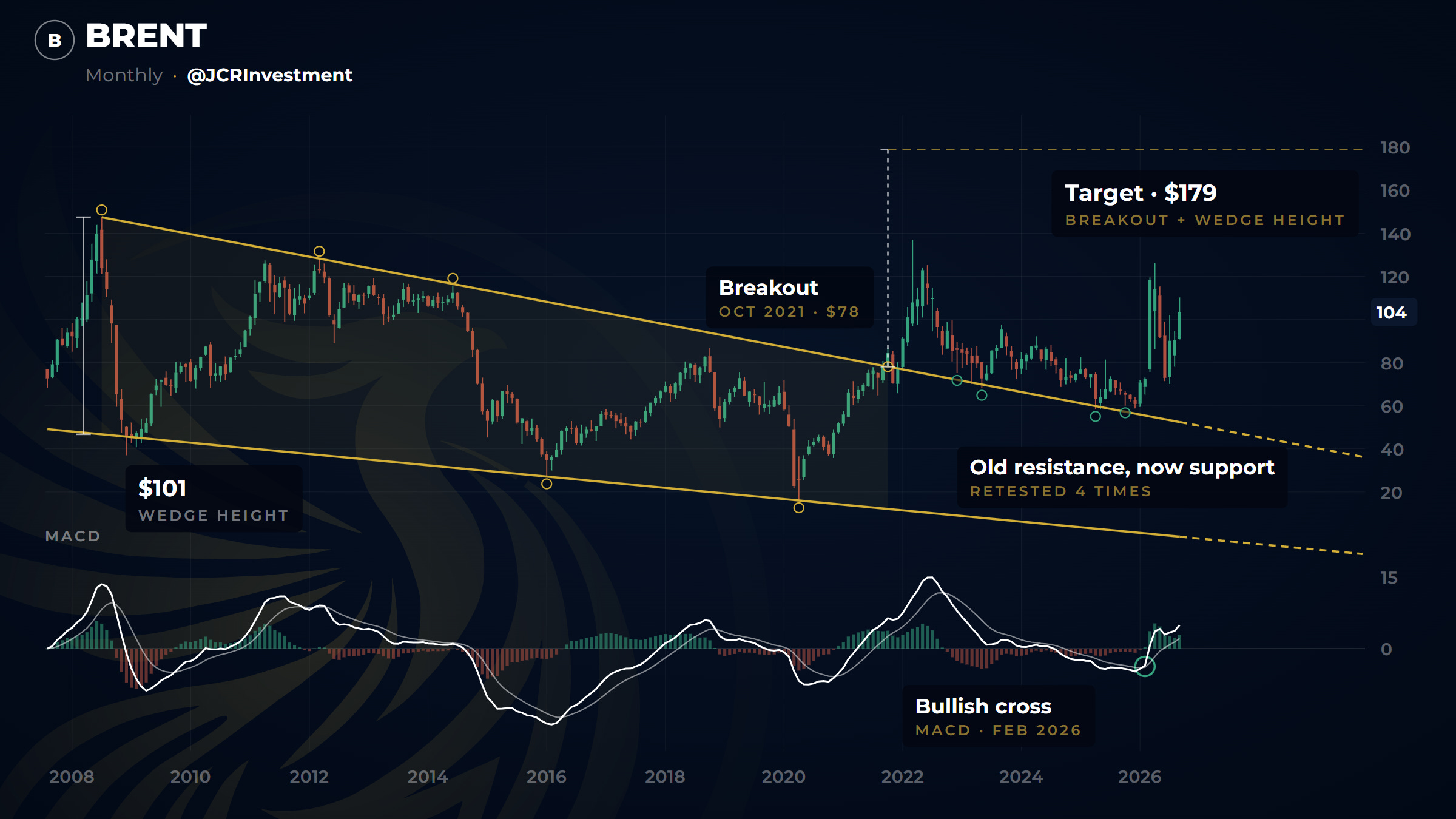
And this comes at a time when oil and diesel are soaring, with no sign of coming down. Personally, the oil chart scares me, because if it reaches its target, the problems it could cause for the global economy would be severe. My own wallet included: my car runs on diesel, and on top of that it’s French. Worst purchase ever.
What to expect from European indices?
Honestly, anyone who tells you they know what will happen is lying. What I can tell you is the most likely outcome and what the market is signaling.
For the Euro Stoxx 50, I expect a drop to its average and its long-term support. Things would have to get very bad for it to lose that level.
If it did, the next support would be its monthly average, around 4,000. That would mean a drop of about 40%. It’s not the scenario I’m considering, but I’ll keep watching as things unfold.
For the other indices, like the CAC 40, I expect a drop to their average.
If it lost that, the next support would be its long-term channel, around 3,500, which would mean a 58% drop. I see this scenario as highly unlikely right now. A more contained correction is what I’d expect, and it’s my base case.
Why is this happening now?
Europe is in a late phase of the cycle, typically marked by frequent drops and corrections, followed by rallies when central banks step in to print money.
And this is my final conclusion. This narrative of a French crisis, and all the signals the market is sending, come at a time when every European country carries enormous debt. On top of that, they have fiscally irresponsible politicians who will never do what it takes to cut the deficit. What does that mean?
That they’ll use this correction and the French narrative to have the ECB come to the rescue, injecting more liquidity into the system and kicking the can down the road, once again. More money printing, more inflation and more currency debasement, which will push food and housing prices even higher, squeezing Europeans even more, especially the young, who already have it far too hard.
I’ll keep tracking how all of this unfolds every week. I hope you enjoyed it. Follow me so you don’t miss the next analysis.
All my strength to every European, especially the young. Investing in hard assets is the only long-term answer to the currency debasement that’s coming.
Cheers, investor.